Meal Planning
The Beginner's Guide to Meal Planning
Meal planning sounds like a chore until you find a system that actually fits your week. Here's how to start simply.
Tomas Bergen · August 14, 2026 · 7 min read
In this article
Why meal planning fails for beginners
Most people try meal planning once, spend a Sunday afternoon writing out an ambitious week of dinners, and abandon it by Wednesday when life gets in the way. This isn't a failure of willpower, it's usually a sign the system was too rigid from the start. A good meal plan needs to bend around your actual week, not the idealized version of it.
Start smaller than you think you should
Rather than planning all seven dinners for the week, start with three or four. Leave the remaining nights open for leftovers, a quick pantry meal, or eating out. This built-in flexibility is what makes a plan survivable when your Tuesday suddenly runs late or your Thursday plans change.
As this becomes a habit, you can extend the plan to more days, but starting small dramatically increases the odds you'll actually stick with it long enough to see the benefits.
The basic structure of a workable plan
A meal plan doesn't need to be complicated. At its simplest, it just needs to answer three questions for each planned day: what's the main dish, what's the side, and do you have everything you need. Write these down somewhere visible, whether that's a notes app, a whiteboard on the fridge, or a dedicated planning tool.
- Pick your proteins for the week first, since they usually take the most planning
- Choose vegetables that can do double duty across two or three meals
- Plan one or two meals that reuse leftovers from earlier in the week
- Leave at least one night unplanned on purpose
Shop from your plan, not the other way around
Once you have even a rough plan, build your grocery list from it directly, checking your fridge and pantry first so you're not buying duplicates. This single habit, shopping with a list built from an actual plan rather than wandering the store deciding as you go, is one of the biggest levers for reducing both waste and cost.
- Write your rough plan for three or four dinners
- Check what you already have in the fridge and pantry
- Build a shopping list only for what's missing
- Buy a little extra of versatile staples like onions, garlic, and eggs
Batch a little, not everything
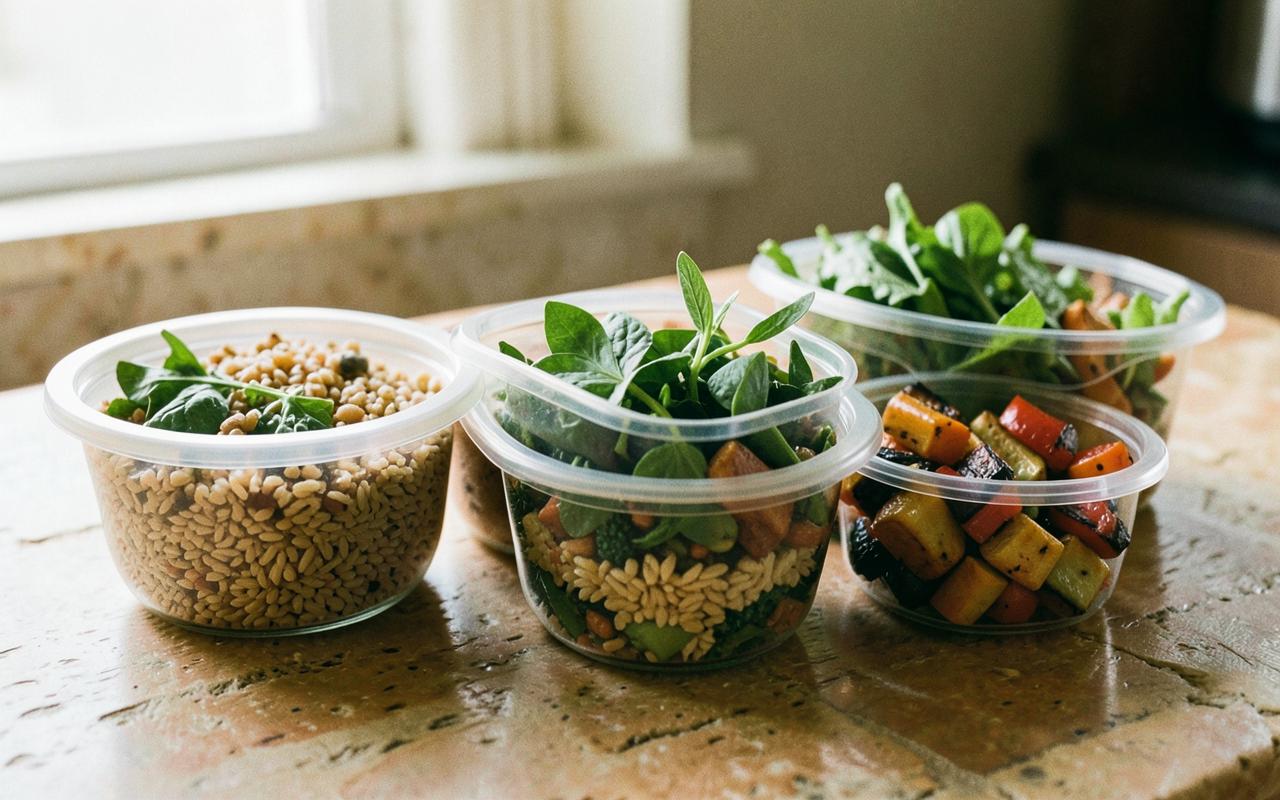
Full weekend meal prep, cooking every meal for the week in advance, works well for some people and burns out others fast. A gentler starting point is to batch just one or two things: cook a big pot of grains, roast a tray of vegetables, or make a base sauce you can use in multiple ways through the week. This gives you a head start without requiring an entire Sunday in the kitchen.
Build in repetition on purpose
New meal planners often think variety is the goal, but repetition is actually your friend, especially early on. Having two or three go-to dinners you rotate through regularly means less decision-making and less risk of a meal falling apart because you're trying something unfamiliar on a busy night. Save the more ambitious or new recipes for nights when you have more time and patience.
Adjust the plan as you go
A meal plan isn't a contract. If Tuesday's planned dinner doesn't happen, move it to Wednesday and adjust Thursday accordingly. The goal of planning is to reduce daily decision-making, not to create a new source of guilt when life doesn't cooperate. Treat the plan as a flexible starting point, and be willing to swap things around without abandoning the whole system.
Keep a note of what worked
After a few weeks, look back at which planned meals actually got made, which got skipped, and why. This is more valuable than any generic template, because it tells you specifically what fits your actual routine. Over time, you'll build a rotation of meals you trust, a shopping list that rarely needs guessing, and a planning habit light enough to actually keep up with, which is the real measure of a meal plan that works.
A useful note, occasionally.
Seasonal ideas and practical kitchen guidance, straight to your inbox.
Related reading
Meal Planning
How to Choose Recipes Based on Time, Ingredients and Skill
Most recipe frustration comes from picking the wrong dish for the moment. Here's a simple framework for matching what you cook to what you actually have to work with.
Anuoluwa Owoeye · July 25, 2026 · 7 min read
Read article →Meal Planning
How Fridge Finder Makes Meal Planning Easier
Meal planning usually starts with a recipe search. Flipping that order, starting from what's already in your fridge, changes everything.
Mara Whitfield · July 8, 2026 · 6 min read
Read article →Meal Planning
How to Create Your Own Recipes From Ingredients You Already Have
Move beyond following recipes and start building meals confidently from whatever is already in your fridge.
Tomas Bergen · June 15, 2026 · 8 min read
Read article →