Meal Planning
How to Meal Prep Without Spending Your Entire Sunday in the Kitchen
The version of meal prep that involves six hours, twelve containers, and total burnout by 4pm isn't sustainable. Here's a leaner approach that still gets you through the week.
Mara Whitfield · June 14, 2026 · 6 min read
In this article
- Prep components, not finished meals
- Cook things that overlap in the oven or on the stove
- Let some things cook themselves
- Pick two or three meals, not seven different ones
- Skip the single-serving container assembly line
- Timebox it
- Do a five-minute reset instead of nothing
- Let a tool handle the planning math
The image of meal prep most people carry around is a marathon: six hours, a sink full of dishes, twelve identical containers lined up like soldiers, and a Sunday afternoon completely gone. That version works for some people, but it burns plenty of others out within a month. There's a leaner way to do this that takes a fraction of the time and still gets you through a busy week without ordering takeout out of desperation.
Prep components, not finished meals
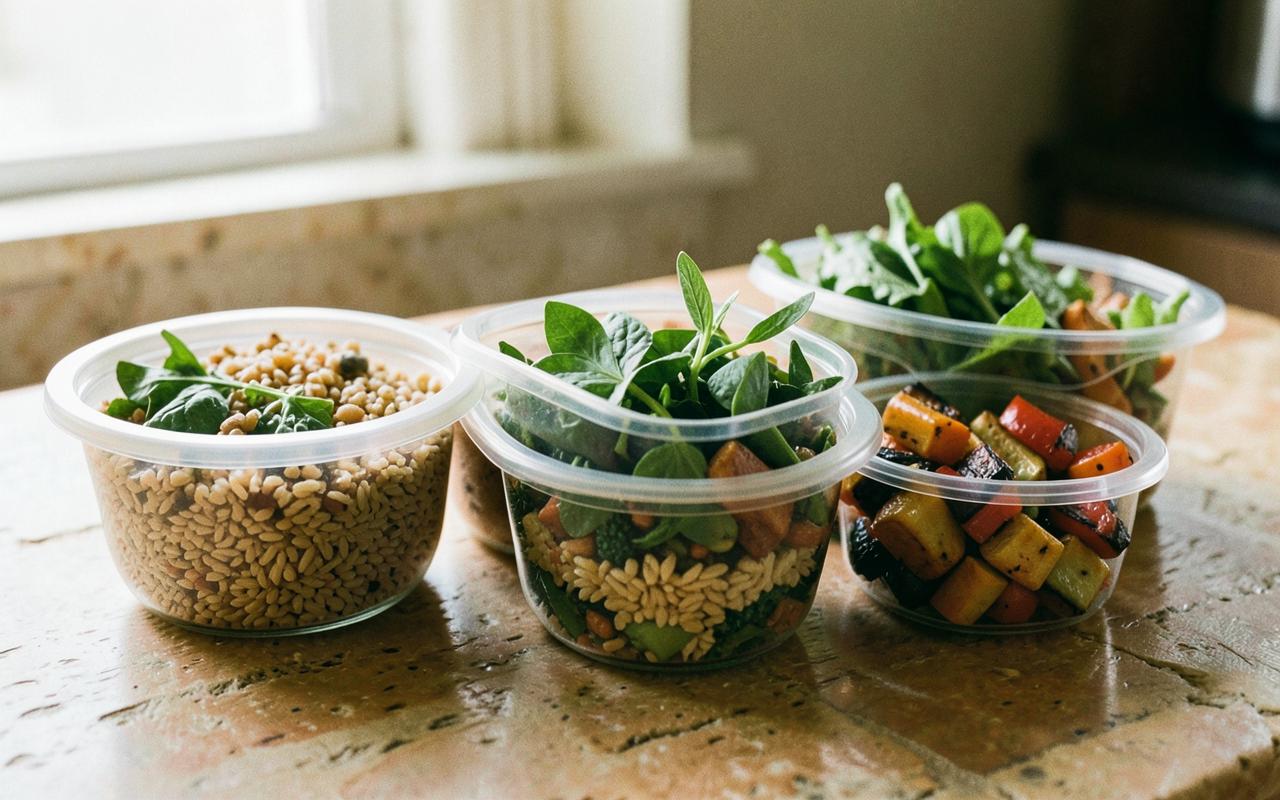
The biggest time sink in traditional meal prep is cooking five or six complete dishes from scratch in one sitting. It's far faster to prep components that recombine into different meals throughout the week. A solid component set might be:
- One roasted vegetable (a big tray of whatever's in season)
- One cooked grain or starch (rice, farro, roasted potatoes)
- One protein, cooked simply so it works in multiple contexts
- One quick sauce or dressing that ties things together
- One or two raw, ready-to-eat items (washed greens, cut cucumbers)
That's five things, not fifteen, and it takes roughly an hour instead of an entire afternoon: because you're not cooking five separate finished dishes, just five reusable building blocks.
Cook things that overlap in the oven or on the stove
Efficient prep is about parallel cooking, not sequential cooking. Get the oven going with a tray of vegetables and a sheet of chicken thighs at the same time, while a pot of rice cooks on the stove and a sauce comes together in a blender or jar. If you're prepping one thing at a time from start to finish, you're doing it the slow way. Look at your component list and group anything that can share oven space, share a pot, or cook completely unattended while you do something else.
Let some things cook themselves
Not everything needs your active attention. Slow cookers, rice cookers, and the oven are all doing useful work while you're not standing over them. A pot of beans or a tray of roasted vegetables needs about five minutes of hands-on time and then an hour of just existing in the background: that's an hour you can spend doing literally anything else, including not being in the kitchen.
Pick two or three meals, not seven different ones
Trying to plan seven unique dinners for the week is what makes the shopping list, the prep, and the actual cooking balloon out of control. Instead, aim for two or three meal "shapes" that reuse your components in different combinations:
- Grain bowl: grain + protein + roasted vegetable + sauce
- Wrap or salad: greens + protein + a quick-pickled or raw vegetable + dressing
- One hot dish: protein and vegetables reheated together with a starch on the side
Three shapes built from five shared components gives you real variety across a week without multiplying your prep time.
Skip the single-serving container assembly line
You don't need to portion every meal into individual containers on Sunday. Storing components separately in a few larger containers and assembling meals fresh each day takes about five extra minutes at mealtime, but it saves significant prep time up front and, importantly, keeps things like greens, sauces, and crunchy elements from turning soggy by Wednesday. Full assembly makes sense for grab-and-go lunches you're taking elsewhere; for meals eaten at home, assembling fresh is often faster overall.
Timebox it
Give yourself a hard limit (say, ninety minutes) and design your prep session around that constraint rather than an open-ended "however long it takes." A time limit forces you to prioritize the components that give you the most mileage (a versatile protein and a sauce) over the ones that add polish but eat time (an elaborate garnish, a dish that only serves one specific meal). If something doesn't fit in the ninety minutes, it gets bumped to a weeknight instead of expanding your Sunday.
Do a five-minute reset instead of nothing
Even on weeks you skip full prep entirely, a five-minute reset makes a disproportionate difference: wash and dry a couple of vegetables, cook one pot of grain, make one jar of dressing. It's not full meal prep, but it removes just enough friction that cooking on a Tuesday night doesn't feel like starting completely from scratch. Consistency in small doses beats an occasional marathon session that you dread and eventually skip.
Let a tool handle the planning math
A lot of the mental load in meal prep isn't the cooking — it's figuring out what to make, what overlaps, and what to buy. Using a planning app like Umami Digital to map out your component list and generate a shopping list from it removes a chunk of the Sunday-morning decision fatigue, so the time you do spend in the kitchen goes straight into cooking rather than figuring out what to cook.
Meal prep doesn't have to mean sacrificing your whole weekend. A tighter, component-based approach gets most of the benefit (fewer weeknight decisions, food ready to go) in a fraction of the time.
A useful note, occasionally.
Seasonal ideas and practical kitchen guidance, straight to your inbox.
Related reading
Meal Planning
The Beginner's Guide to Meal Planning
Meal planning sounds like a chore until you find a system that actually fits your week. Here's how to start simply.
Tomas Bergen · August 14, 2026 · 7 min read
Read article →Meal Planning
How to Choose Recipes Based on Time, Ingredients and Skill
Most recipe frustration comes from picking the wrong dish for the moment. Here's a simple framework for matching what you cook to what you actually have to work with.
Anuoluwa Owoeye · July 25, 2026 · 7 min read
Read article →Meal Planning
How Fridge Finder Makes Meal Planning Easier
Meal planning usually starts with a recipe search. Flipping that order, starting from what's already in your fridge, changes everything.
Mara Whitfield · July 8, 2026 · 6 min read
Read article →