Meal Planning
The Complete Guide to Cooking for One
Cooking for a household of one has its own rules — most recipes are written for four, most produce comes in bulk, and eating the same leftovers for a week gets old fast.
Anuoluwa Owoeye · May 6, 2026 · 7 min read
In this article
- Rethink "leftovers" as planned meals, not overflow
- Buy produce that matches your pace, not the package size
- Right-size your equipment
- Learn a handful of one-pan, one-portion meals cold
- Make friends with your freezer
- Don't be afraid to "waste" a little for sanity's sake
- Make the meal feel complete, not like an afterthought
Most recipes, grocery store packaging, and even kitchen equipment assume you're cooking for a family. If you're cooking for one, that mismatch shows up constantly: half an onion going soft in the crisper, a recipe for four you have no interest in eating four times, a pot too big for a single portion of rice. Cooking well for one person is a genuinely different skill from scaling a family recipe down, and it rewards a slightly different set of habits.
Rethink "leftovers" as planned meals, not overflow
Cooking a full recipe and eating the same thing four nights straight is a fast route to food boredom. Instead, cook with intentional repurposing in mind from the start:
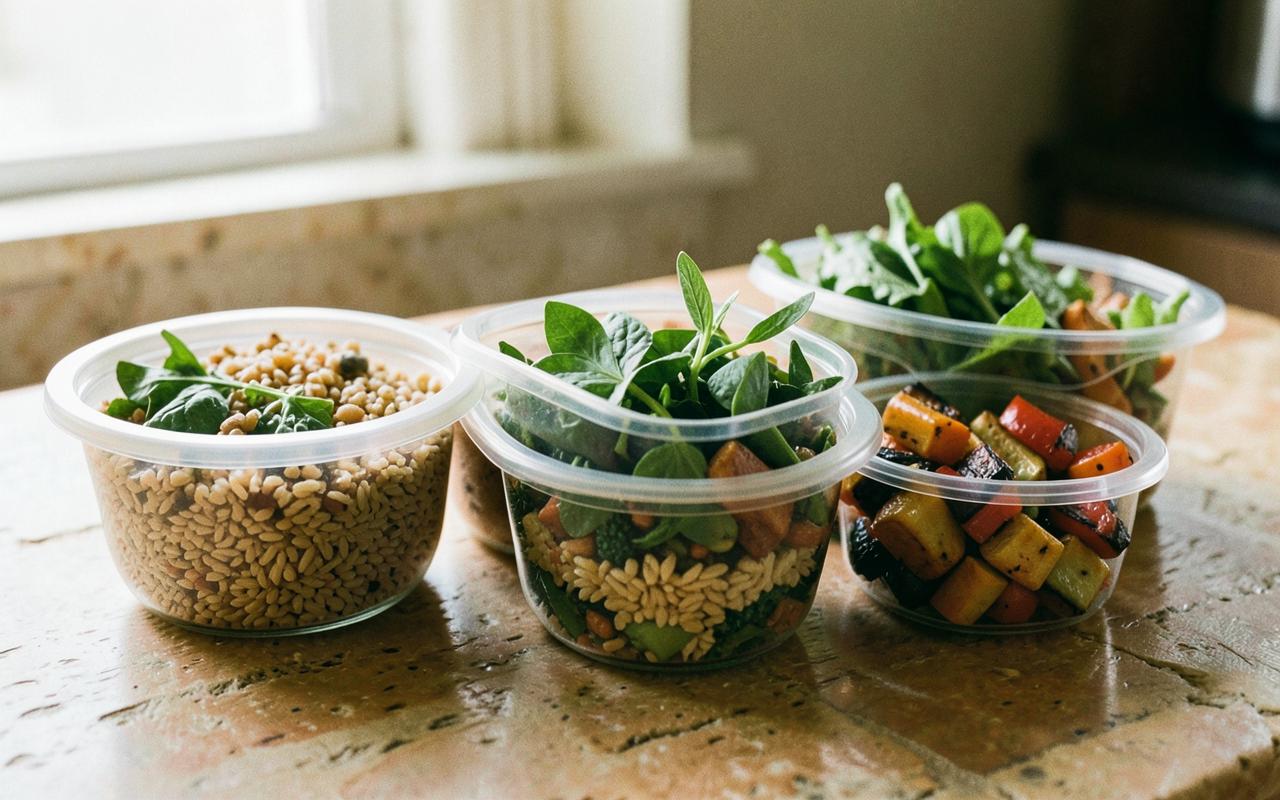
- Roast a big tray of vegetables once, then use them in a grain bowl, tossed into pasta, and folded into an omelet across the week
- Make a base protein (shredded chicken, a pot of beans, browned ground turkey) and change the seasoning profile each time you use it
- Cook a large pot of a very freezable dish (chili, curry, soup) and freeze it in single portions immediately, not after a week of eating it as leftovers
The goal is variety from a small set of building blocks, rather than one dish reheated identically for days.
Buy produce that matches your pace, not the package size
Grocery stores are built around family-sized bags and bunches, which is exactly why so much produce for solo cooks ends up wilted in the crisper drawer. A few fixes:
- Buy from bulk bins or the salad bar for small quantities of things you only need a little of
- Choose frozen vegetables for staples you use often but not quickly (peas, corn, spinach) since they won't go bad while you get around to them
- Plan two or three meals that intentionally share an ingredient, so a bunch of cilantro or a bag of carrots gets used up on purpose instead of by accident
Right-size your equipment
Cooking a single portion of rice in a pot built for six often ends in a scorched, unevenly cooked mess, because the ratio of food to pot surface is all wrong. A small saucepan, an 8-inch skillet, and a single-serving sheet pan or toaster oven insert make a genuine difference in how evenly food cooks, and they heat up faster too, which matters when you're cooking after a long day and don't want to wait fifteen minutes for a huge pot of water to boil.
Learn a handful of one-pan, one-portion meals cold
Having three or four meals you can make almost without thinking is more valuable for solo cooking than a stack of recipes you have to relearn each time. Good candidates share a few traits: one pan, minimal chopping, and ingredients you tend to have on hand. A fried egg over greens with toast, a quick stir-fry with whatever protein and vegetables are around, a single-serving pasta with garlic and olive oil. these aren't fancy, but they're the meals that actually get cooked on a Tuesday.
Make friends with your freezer
The freezer does more work for solo cooks than for anyone else, because it solves the core problem of recipes that naturally make more than one portion. A few practical habits:
- Freeze soups, stews, and sauces in single-portion containers or even ice cube trays for small amounts of things like pesto or tomato paste
- Portion and freeze raw meat immediately after buying it in bulk, rather than letting a big package sit in the fridge
- Keep a small rotating stock of frozen homemade meals for the nights you truly don't want to cook: this does more for eating well than any amount of willpower
Don't be afraid to "waste" a little for sanity's sake
Sometimes the math of cooking exactly one portion just isn't worth the effort: a stock recipe that only works well in bulk, a sauce that's genuinely better made in a larger batch and frozen. It's fine to cook a "family-sized" batch of a few things purely because the freezer will handle the rest, rather than trying to shrink every single recipe down to a portion of one. Fighting every recipe down to a single serving adds friction that isn't worth it for dishes that freeze and reheat well anyway.
Make the meal feel complete, not like an afterthought
It's easy to let solo meals slide into "cereal for dinner" territory, especially at the end of a long day. Setting a small ritual (a real plate instead of eating from the pot, a glass of something you like, even just sitting at the table instead of standing at the counter) makes a noticeable difference in how satisfying solo meals feel, independent of what's actually being eaten. If you're using an app like Umami Digital to track servings and shopping lists, adjusting default serving sizes down to one from the start avoids the repeated mental math of halving everything by hand.
Cooking for one isn't a smaller version of cooking for a family: it has its own logic around batching, freezing, and building meals from shared components. Once that clicks, it stops feeling like a compromise and starts feeling like its own efficient way of eating well.
A useful note, occasionally.
Seasonal ideas and practical kitchen guidance, straight to your inbox.
Related reading
Meal Planning
The Beginner's Guide to Meal Planning
Meal planning sounds like a chore until you find a system that actually fits your week. Here's how to start simply.
Tomas Bergen · August 14, 2026 · 7 min read
Read article →Meal Planning
How to Choose Recipes Based on Time, Ingredients and Skill
Most recipe frustration comes from picking the wrong dish for the moment. Here's a simple framework for matching what you cook to what you actually have to work with.
Anuoluwa Owoeye · July 25, 2026 · 7 min read
Read article →Meal Planning
How Fridge Finder Makes Meal Planning Easier
Meal planning usually starts with a recipe search. Flipping that order, starting from what's already in your fridge, changes everything.
Mara Whitfield · July 8, 2026 · 6 min read
Read article →